


Hydraulic Valve
Taien: Leading Hydraulic Valve Supplier
Guangzhou Taien Automation Equipment Co., Ltd. is an international trading company specializing in the sale of high-quality industrial equipment and machinery. We rely on manufacturers with established quality systems to produce reliable products.


Why Choose Us
Professional Technical Team
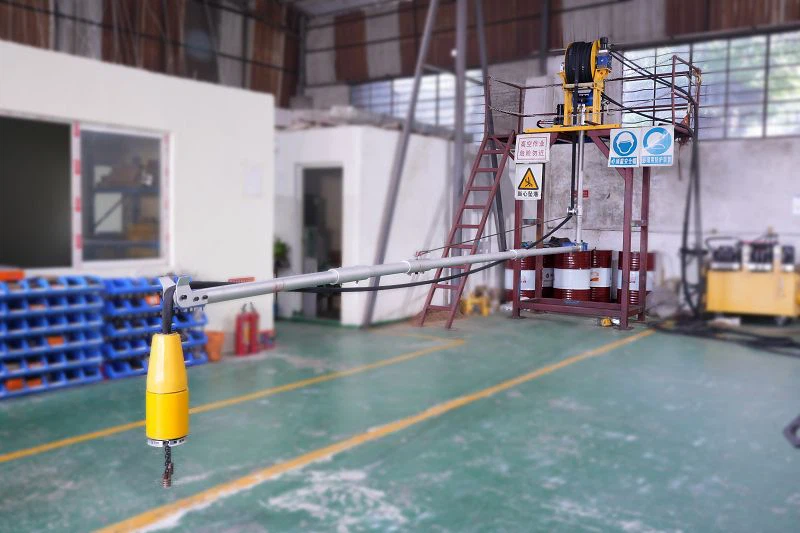
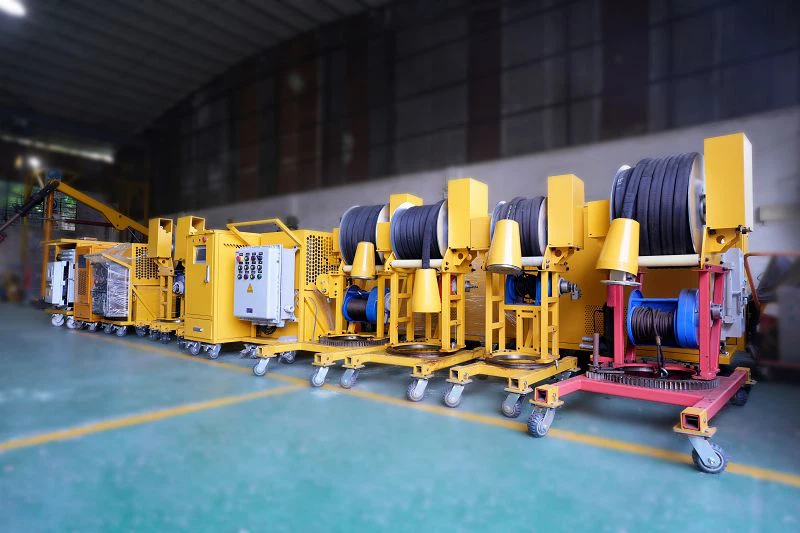
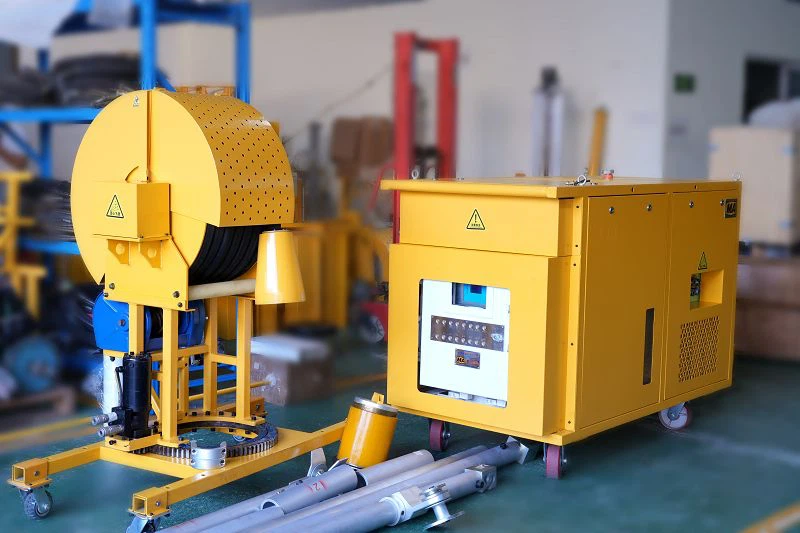
Our facility is equipped with advanced processing machinery and a team of over ten professional engineers, ensuring that our sales team can provide reliable support and assurance for every client project.
Quality Certification
Our factory has obtained ISO 9001 (quality management system), ISO 14001 (environmental management system), and CE certification (for European market). For explosion-proof products (such as anti-corrosion silo cleaning machines), we also have ATEX and IECEx certifications to meet global market requirements.
OEM/ODM services
We have rich OEM/ODM experience. We can provide one-stop services from product design to mass production according to customers' requirements.
Global Markets
We have successful customer service and case studies worldwide, with clients in Europe, America, Africa, and the Middle East, including silo cleaners in Africa, the Middle East, and South Asia.
Types of Hydraulic Valve
Rotary Directional Control Valve
WE5 directional control valve is a reversing slide valve operated by electromagnet, which is used to control the start, stop and flow direction of oil.
01
Water Pump Pressure Control Valve
This kind of valve is suitable for hydraulic system using mineral oil or synthetic fluid with similar lubrication characteristics.
02
Flow Control Valve
Flow control valves are any device manufactured for the purpose of modifying the rate of fluid flow in a portion of a hydraulic circuit.
03
Sandwich Plate Valve
The sandwich plate design allows for simplification of the control set-up. This applies not only to standardised constructions, but also to customer-specific requests.
04
Electronic Proportional Valve
Electronic Proportional Valves are high-precision pressure control components integrating advanced electronic and hydraulic technologies, designed for automated industrial systems.
05
Specifications
|
Maximum working pressure |
350bar |
|
Maximum flow capacity |
120 L/min |
|
Connection port dimensions |
1/2 inch BSP |
|
Operating temperature range |
-20°C to 80°C |
|
How the valve is operated |
Manual, Solenoid, Pneumatic |
|
Internal leakage at rated pressure |
<0.05% of flow |

Hydraulic valves are commonly manufactured from iron, brass, carbon steel, or stainless steel because these materials offer strength, wear resistance, and corrosion protection. The sealing materials are made of nitrile rubber, fluororubber, or polyurethane, offering resistance to oil, high temperatures, and high pressure. For lighter-duty or specialty applications, engineered plastics and other nonmetallic components may also be used.
Advantages of Hydraulic Valves
Simple and compact structure
Hydraulic valves are small enough to fit into corners and places that are difficult to access. They can fit into your pipeline at almost any point and won’t take up extra space once installed.
Smooth and Reliable Hydraulic Transmission
Hydraulic systems offer the silky-smooth fluidity of liquid power transmission, so you can depend on a tight-sealing hydraulic valve for years to come.
Large Output Torque
Hydraulic power means extra power. Having more torque in valve actuation means that hydraulic valves can service fast flow rates and overcome high pressures easily.
Adjustable Output Torque
The output torque can be precisely adjusted by the constant pressure relief valve, including the adjustment of opening and closing torque, which can even be directly reflected by the hydraulic meter.
Convenient Speed Regulation
Regulating the flow rate is another important advantage of hydraulic valves. If your application demands articulate actuation and precise flow regulation, you should consider using hydraulic valves.
Performance in Power Failure Situations
In the event of a sudden accident and a power outage, we can still use a power accumulator to perform one or more operations. This has great significance for long-distance pipeline automatic emergency shut-off valves and discharge valves.
Application Scenarios for Hydraulic Valves
Construction:
In heavy machinery, hydraulic valves are responsible for power steering, loader arms, and backhoes.
01
Manufacturing:
These valves control automated machinery, ensuring precise movements and operations of CNC machines and assembly robots.
02
Agriculture:
Hydraulic valves assist in operating tractors and harvesting equipment, optimizing fuel usage through efficient hydraulic systems.
03
Marine:
Hydraulic valves are used to control hydraulic steering systems, winch assemblies, and stabilizers on ships and offshore platforms.
04
Automotive:
Hydraulic valves perform hydraulic control functions within braking systems, power steering systems, and suspension systems.
05
One of the most important installation requirements is proper mounting. The valve should be mounted securely to a flat, stable surface using the appropriate mounting hardware. Make sure that the mounting surface is level and that the valve is aligned correctly.
Another crucial aspect of installation is the connection of the hydraulic lines. The lines should be properly sized and rated for the pressure and flow requirements of the system. You need to use the correct fittings and seals to ensure a tight, leak-free connection.
In addition to proper mounting and line connection, you also need to ensure that the valve is properly adjusted. This may involve setting the pressure, flow rate, or other parameters according to the requirements of your system.
After the valve is installed, it's important to test the hydraulic system to make sure that everything is working correctly. This involves checking for leaks, monitoring the pressure and flow rate, and ensuring that the valve is responding as expected.

Heat Treatment & Surface Requirements
Heat treatment and surface finishing ensure Hydraulic valve performance, especially for CNC valve parts and Proportional valve components. Key requirements:
Spool/Sleeve Heat Treatment:
Quenching, tempering, and nitriding/carburizing for hardness and wear resistance.
Surface Roughness:
Ra ≤ 0.2μm (via honing) for smooth sliding—essential for precision Hydraulic valve, Solenoid valve, and Proportional valve performance.
Hardness:
Spools require HRC 55–62 to resist wear.
Quality Control:
No cracks, decarburization, or excess deformation—critical for Custom hydraulic valve and CNC valve parts.
How To Order
Contact Us: Reach out via our website, email, or phone to schedule your initial consultation.
Order Submission Details: Please provide the quantity and any other requirements, and we will send you a formal quotation.
Invoice Payment: Make payment based on the proforma invoice to kickstart the production.
Production Sample Creation: We create pre-production samples for your confirmation before full production begins.
Approval of Preproduction Samples: Review pictures or request samples to confirm before bulk production starts.
Production Process: We update you with photos and videos of the completed products, along with shipping cost details.
Shipping and Balance Payment: Once the balance is received, your bulk order is shipped to your chosen location.
Packaging and Delivery
|
Delivery Time: |
The total production cycle is about 13-15 days for standard models. The lead time for custom products will be extended. |
|
Payment Method: |
We accept cash, bank transfers, Telegraphic Transfers (T/T), PayPal, Western Union, credit cards, Letters of Credit (L/C), and other methods. |
|
Packaging Details: |
All hydraulic products are packaged in sturdy cardboard boxes, reinforced with internal foam padding to prevent damage during transit. For large-volume orders, we can ship using wooden crates. |
|
Shipping Methods: |
We can provide sea and air freight services |
Our Factory

FAQ